Shadcn Dashboard Dropdown
Sleek, customizable Shadcn dashboard dropdown blocks to enhance dashboard and app UI with smooth, interactive user experiences for better navigation.
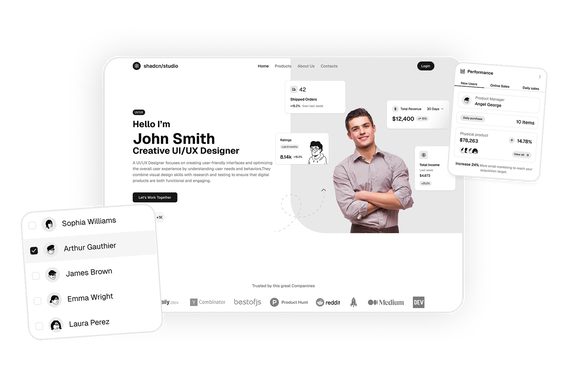
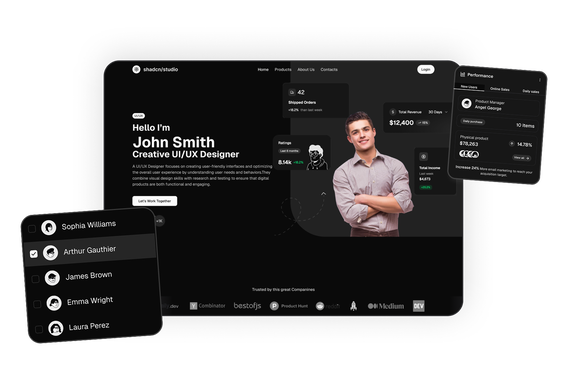
Shadcn Dashboard Dropdown Blocks
Shadcn Dashboard Dropdown Blocks are modern UI components designed to display contextual menus and quick actions inside dashboards and web applications. Built using Shadcn UI, Tailwind CSS, and React, these blocks allow developers to create interactive dropdown menus triggered by buttons, icons, or user avatars.
Dropdown menus are widely used in SaaS dashboards, admin panels, productivity tools, and enterprise applications. They provide a clean way to organize secondary actions such as profile settings, notifications, export options, and navigation links without cluttering the main interface.
At Shadcn Studio, you will find numerous Shadcn Blocks. The dashboard dropdown blocks include responsive menu layouts for user profile menus, language selectors, and action menus that enhance navigation and usability within modern dashboards.
Many teams also integrate these layouts into scalable Base UI Dashboard Dropdown Block workflows and reusable Radix UI Dashboard Dropdown Block systems for modern React applications.
What Is a Dashboard Dropdown in Web Design?
A dashboard dropdown is a shadcn UI component that displays a menu of options when triggered by a button, icon, or user avatar within a dashboard interface.
A typical dashboard dropdown includes:
- A trigger element such as a button or avatar
- A floating dropdown menu container
- Menu items representing actions or navigation links
- Optional icons, separators, or labels
- Submenus for grouped actions
Dropdown menus help keep interfaces clean by grouping secondary actions under a single trigger instead of displaying every option directly in the UI.
Why Use Shadcn Dashboard Dropdown Blocks?
Shadcn dashboard dropdown blocks provide structured menu interfaces that help developers build organized application interfaces.
Organized Action Menus
Dropdowns group multiple actions into a compact menu, keeping the dashboard interface uncluttered.
Built with React and Tailwind
Shadcn components are built using React and Tailwind CSS, enabling seamless integration with frameworks like Next.js and modern frontend stacks.
These layouts also work well for composable Base UI Dashboard Dropdown Block implementations with scalable menu systems.
Contextual User Actions
Menus can display context-specific actions such as edit, delete, export, or share.
Many developers use Radix UI Dashboard Dropdown Block patterns for accessible and reusable dashboard navigation systems.
Accessible Menu Navigation
Shadcn dropdown components support keyboard navigation and accessibility best practices.
Copy-Paste Developer Workflow
Shadcn blocks follow a copy-paste or CLI install workflow, allowing developers to quickly integrate dropdown menus into dashboards.
Key Elements of a Dashboard Dropdown
Effective dashboard dropdown components include several important elements.
Trigger Button
The element that opens the dropdown menu, such as a user avatar, icon button, or action menu.
Dropdown Menu Container
A floating panel that displays available actions.
Menu Items
Each menu item represents an action such as opening settings, managing billing, or logging out.
Grouped Actions
Menu items may be grouped using labels or separators.
Submenus
Nested menus allow developers to organize complex action sets.
Types of Dashboard Dropdown Layouts
Different web applications use different dropdown layouts depending on their interface design.
User Profile Dropdown
Displays account settings, billing, team management, and logout options.
Notifications Dropdown
Shows recent alerts, messages, or activity updates.
Action Menu Dropdown
Provides contextual actions for items in tables or cards.
Language Selector Dropdown
Allows users to change language or localization settings.
Toolbar Dropdown
Groups advanced actions in dashboards or editors.
Use Cases for Dashboard Dropdown Blocks
Shadcn dashboard dropdown blocks are widely used across modern web applications.
SaaS Dashboards
Allow users to access account settings, billing information, and profile options.
Admin Panels
Provide contextual actions for records in tables or management interfaces.
Analytics Platforms
Offer export options, filters, and configuration menus.
Project Management Tools
Allow users to manage tasks, teams, and project settings.
Enterprise Applications
Organize complex actions into structured menus.
Features of Shadcn Dashboard Dropdown Blocks
Shadcn dashboard dropdown blocks include several UI features designed for modern web applications.
Common features include:
- User profile dropdown menus
- Action menu dropdowns
- Language selector menus
- Menu grouping and separators
- Nested submenu support
- Keyboard navigation and accessibility support
- Tailwind CSS styling
- Dark mode compatibility
- Flexible composition support for Base UI Dashboard Dropdown Block systems
- Accessible menu interaction patterns for Radix UI Dashboard Dropdown Block workflows
These features help developers create clean and organized dashboards that present contextual actions without overwhelming the interface.
Base UI Dashboard Dropdown Block Support
Shadcn Studio layouts can be integrated into scalable Base UI Dashboard Dropdown Block workflows for modern React applications. Developers can build accessible and composable dropdown systems while maintaining flexible menu structures and reusable dashboard interactions.
To get proper guidence, refer the tutorial on how to Migrate from Radix UI to Base UI
Radix UI Dashboard Dropdown Block Support
The layouts also work well with Radix UI Dashboard Dropdown Block implementations commonly used in the Shadcn ecosystem. Developers can leverage accessible primitives, composable menu structures, and reusable interaction patterns for production-ready dashboards.
Many teams prefer Radix UI Dashboard Dropdown Block patterns for scalable application workflows and modern admin interfaces.