Shadcn Logo Cloud
Boost credibility with Shadcn Logo Cloud sections. Showcase trusted clients, partners, or tools in an organized visual grid.
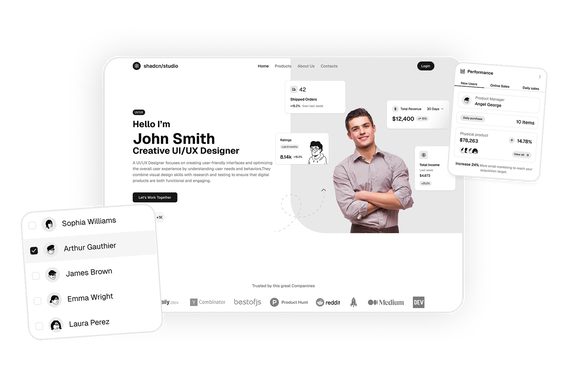
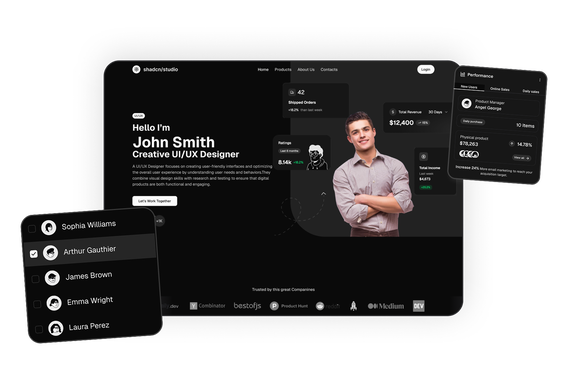
Shadcn Logo Cloud Blocks
Shadcn Logo Cloud Blocks are modern UI components designed to showcase trusted clients, partners, integrations, or brand affiliations on websites and landing pages. Built using Shadcn UI, Tailwind CSS, and React, these blocks display company logos in structured grids that help communicate credibility and industry trust.
Logo clouds are commonly used in SaaS landing pages, startup websites, agency portfolios, and product marketing pages. By displaying recognizable brand logos, these sections provide strong visual social proof that reassures potential customers and strengthens brand reputation.
At Shadcn Studio, developers can explore numerous Shadcn Blocks. The logo cloud blocks provide responsive layouts that allow developers to present brand logos in clean grids or scrolling rows, helping websites demonstrate trusted partnerships and customer adoption.
Many teams also integrate these layouts into scalable Base UI Logo Cloud Block workflows and reusable Radix UI Logo Cloud Block systems for modern React marketing applications.
What Is a Logo Cloud in Web Design?
A logo cloud is a UI section that displays logos of companies, partners, customers, or sponsors in a visually organized layout. These logos act as social proof that demonstrates trust, credibility, and industry recognition.
A typical logo cloud includes:
- A grid or row of company logos
- A heading such as “Trusted by” or “Used by leading companies”
- Brand logos displayed in grayscale or subtle styling
- Responsive layouts for different screen sizes
- Optional animations or hover effects
Logo clouds are widely used on landing pages because they quickly communicate brand trust and partnerships without requiring long explanations.
Why Use Shadcn Logo Cloud Blocks?
Shadcn logo cloud blocks provide simple but powerful UI layouts that help developers build credibility-focused sections quickly.
Powerful Social Proof
Displaying logos of trusted companies builds confidence in your product or service.
Built with React and Tailwind
Shadcn logo cloud components are built using React and Tailwind CSS, allowing easy integration with frameworks such as Next.js and modern frontend stacks.
These layouts also work well for composable Base UI Logo Cloud Block implementations with scalable social proof workflows.
Clean Visual Layouts
Logo grids maintain visual balance while showcasing multiple brands or partnerships.
Many developers use Radix UI Logo Cloud Block patterns for accessible and reusable brand showcase interfaces.
Responsive Design
Logo clouds automatically adapt across desktop, tablet, and mobile devices.
Copy-Paste Developer Workflow
Shadcn blocks follow a copy-paste or CLI install workflow, allowing developers to quickly integrate production-ready UI layouts into projects.
Key Elements of a High-Quality Logo Cloud
Effective logo cloud sections include several important elements.
Brand Logos
Recognizable company logos form the core of the section and communicate trust.
Trust Messaging
Headlines such as “Trusted by leading companies” reinforce credibility.
Consistent Logo Styling
Logos are typically displayed in grayscale or muted styles to maintain visual harmony.
Responsive Grid Layout
Logos are arranged in flexible grids that adapt across screen sizes.
Interactive Effects
Hover effects or animations can highlight logos when users interact with them.
Types of Logo Cloud Layouts
Different websites implement different logo cloud designs depending on their branding and content structure.
Grid Logo Cloud
Displays company logos in a structured grid layout.
Scrolling Logo Cloud
Uses animated scrolling rows to display multiple brand logos.
Minimal Logo Row
A simple horizontal row of logos below a hero section.
Integration Logo Cloud
Highlights software integrations and platform partnerships.
Press & Media Logo Cloud
Displays logos of media outlets or publications featuring the company.
Use Cases for Logo Cloud Blocks
Shadcn logo cloud blocks are widely used across many types of websites.
SaaS Landing Pages
Display logos of companies using the product.
Startup Websites
Showcase early adopters or partner organizations.
Agency Websites
Highlight client brands and successful collaborations.
Product Integration Pages
Showcase tools and platforms integrated with the product.
Press & Media Pages
Display logos of publications that have featured the company.
Features of Shadcn Logo Cloud Blocks
Shadcn logo cloud blocks include several UI features designed for modern marketing websites.
Common features include:
- Responsive logo grids
- Brand logo image support
- Hover animations or interactions
- Grayscale logo styling
- Scrolling logo marquee options
- Flexible grid layouts
- Tailwind CSS styling
- Dark mode compatibility
- Flexible composition support for Base UI Logo Cloud Block systems
- Accessible social proof patterns for Radix UI Logo Cloud Block workflows
These shadcn components help developers create trust-building sections that visually demonstrate partnerships, customer adoption, and brand credibility.
Base UI Logo Cloud Block Support
Shadcn Studio layouts can be integrated into scalable Base UI Logo Cloud Block workflows for modern React applications. Developers can build accessible and composable logo showcase systems while maintaining flexible branding layouts and reusable social proof interfaces.
To get proper guidence, refer the tutorial on how to Migrate from Radix UI to Base UI
Radix UI Logo Cloud Block Support
The layouts also work well with Radix UI Logo Cloud Block implementations commonly used in the Shadcn ecosystem. Developers can leverage accessible primitives, composable logo structures, and reusable trust-building workflows for production-ready applications.
Many teams prefer Radix UI Logo Cloud Block patterns for scalable marketing systems and modern credibility-focused experiences.