Shadcn Compare
Ready-to-use Shadcn Compare blocks that let designers and developers add clean, flexible comparison sections for features, plans, or products.

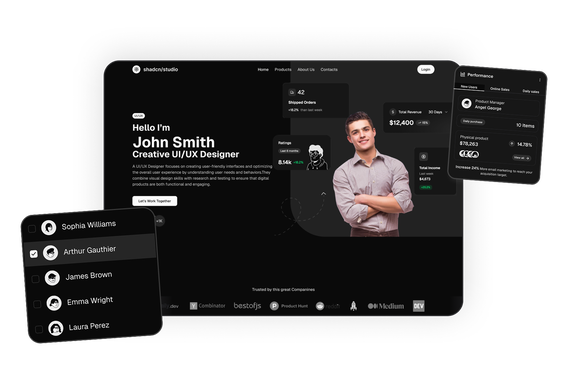
Shadcn Compare Blocks
Shadcn Compare Blocks are modern UI components designed to display side-by-side comparisons of products, features, plans, or services. Built using Shadcn UI, Tailwind CSS, and React, these blocks allow developers to present structured comparison tables that help users quickly understand differences between multiple options.
Comparison sections are widely used on SaaS pricing pages, product landing pages, feature comparison pages, and competitor analysis pages. By organizing information in a structured grid or table layout, comparison blocks allow users to evaluate multiple options without scanning large amounts of text.
At Shadcn Studio, developers can explore numerous Shadcn Blocks. The compare blocks include flexible layouts for comparing product features, pricing plans, or service offerings in a clean and user-friendly interface.
Many teams also integrate these layouts into scalable Base UI Compare Block workflows and reusable Radix UI Compare Block systems for modern React applications.
What Is a Comparison Section in Web Design?
A comparison section is a webpage component that presents two or more options side-by-side so users can evaluate differences between them. These sections are often structured as comparison tables or feature matrices.
A typical comparison section includes:
- Column headers representing products or plans
- Rows listing features or attributes
- Icons such as checkmarks or cross symbols
- Highlighted columns for recommended options
- Clear visual alignment for easy comparison
Comparison sections Shadcn components help users quickly understand which option best fits their needs by presenting structured information visually.
Why Use Shadcn Compare Blocks?
Shadcn compare blocks provide structured layouts that help developers present comparison data clearly and effectively.
Simplified Decision-Making
Comparison tables make it easier for users to evaluate options without reading long descriptions.
Built with React and Tailwind
Shadcn compare components are built using React and Tailwind CSS, allowing seamless integration with frameworks like Next.js and modern frontend stacks.
These layouts also work well for composable Base UI Compare Block implementations with scalable SaaS workflows.
Clear Feature Visualization
Icons, checkmarks, and structured rows help users quickly identify differences.
Many developers use Radix UI Compare Block patterns for accessible and reusable comparison interfaces.
Responsive Layout Design
Comparison sections adapt across desktop, tablet, and mobile devices for better readability.
Copy-Paste Developer Workflow
Shadcn blocks follow a copy-paste or CLI install workflow, enabling developers to quickly add comparison tables to landing pages or applications.
Key Elements of an Effective Comparison Section
Successful comparison sections include several important elements.
Feature Rows
Rows list the features or attributes being compared.
Option Columns
Columns represent the products, plans, or services being evaluated.
Visual Indicators
Checkmarks, icons, or badges highlight feature availability or advantages.
Highlighted Recommendations
Some comparisons highlight a recommended or most popular option.
Clear Labels
Headings and descriptions ensure users understand what each feature represents.
Types of Comparison Layouts
Different websites use different comparison layouts depending on the type of information being presented.
Feature Comparison Table
Displays features across multiple products or pricing plans.
Before vs After Comparison
Shows improvements or transformations after using a product.
Competitor Comparison Section
Highlights differences between your product and competitors.
Pricing Plan Comparison
Compares features across different subscription tiers.
Specification Comparison
Used for technical products with detailed specifications.
Use Cases for Compare Blocks
Shadcn compare blocks are widely used across many types of websites.
SaaS Pricing Pages
Compare features across subscription plans.
Product Landing Pages
Show how a product differs from competitors.
Software Feature Pages
Highlight key differences between tools or product versions.
E-commerce Websites
Compare specifications between products.
Marketing Websites
Demonstrate product advantages and value propositions.
Features of Shadcn Compare Blocks
Shadcn compare blocks include several UI features designed for modern product websites.
Common features include:
- Feature comparison tables
- Side-by-side comparison layouts
- Checkmark and status indicators
- Highlighted recommended options
- Responsive table layouts
- Interactive UI elements
- Tailwind CSS styling
- Dark mode compatibility
- Flexible composition support for Base UI Compare Block systems
- Accessible comparison patterns for Radix UI Compare Block workflows
These features help developers create clear comparison interfaces that help users evaluate options and make informed decisions quickly.
Base UI Compare Block Support
Shadcn Studio layouts can be integrated into scalable Base UI Compare Block workflows for modern React applications. Developers can build accessible and composable comparison systems while maintaining flexible table layouts and reusable feature comparison interfaces.
To get proper guidence, refer the tutorial on how to Migrate from Radix UI to Base UI
Radix UI Compare Block Support
The layouts also work well with Radix UI Compare Block implementations commonly used in the Shadcn ecosystem. Developers can leverage accessible primitives, composable comparison structures, and reusable SaaS workflows for production-ready applications.
Many teams prefer Radix UI Compare Block patterns for scalable pricing systems and modern feature comparison experiences.